On this page
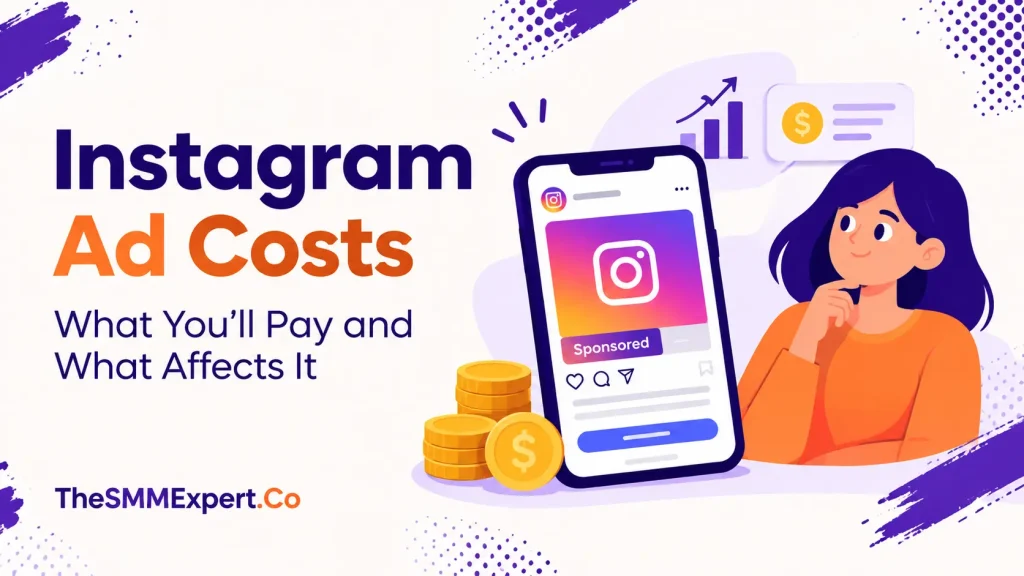
Instagram ad costs don’t have one fixed price. You can spend a small daily budget or a larger campaign budget, but the final amount depends on your budget limit, audience, ad quality, campaign goal, competition, and schedule. Meta charges through an ad auction, so the same audience can cost different amounts at different times. This guide explains how to set a useful budget, read the main numbers, avoid wasted spend, and know when Instagram isn’t the right channel.
How Instagram ad costs work
Instagram advertising is paid promotion shown through Meta’s advertising system. You choose a campaign goal, audience, placement, budget, and schedule. Meta then tries to show the ad to people most likely to take the action you selected, such as viewing a video, visiting a website, sending a message, or buying something.
There isn’t one standard price for an Instagram ad. You control the budget limit, but the cost of each result can change as other advertisers compete for the same audience. Meta explains that pricing depends on factors such as the ad auction, estimated action rates, ad quality, audience, objective, and timing. You can read its ad pricing explanation for the platform’s own description.
A daily budget is the average amount you want to spend per day. A lifetime budget is the total amount you want to spend across the campaign dates. The option you choose affects how Meta delivers the ad and how much flexibility the system has from day to day.
The main misconception is that a large budget automatically makes an ad profitable. It doesn’t. A weak offer, unclear creative, or badly matched audience can spend money without producing useful results. A smaller campaign with a clear goal can teach you more than a large campaign that tries to reach everyone.
Instagram ads are mainly for businesses, creators, nonprofits, and organizations that need measurable reach or action. They aren’t a good fit for every message. If your audience rarely uses Instagram, or your offer needs a long personal explanation, another channel may perform better.
The simple trade-off is reach versus control. A larger budget gives the system more chances to find useful people, while a smaller budget limits risk but may produce slower or less reliable feedback.
Set up Instagram ads step by step
Start with one clear result. Don’t ask one campaign to get sales, followers, video views, and messages at the same time. Choose the result that matters most for this campaign, then judge the ad against that result.
-
Choose the campaign goal. Select a goal that matches the action you want. Use a traffic or landing-page goal for visits, a leads goal for contact details, a sales goal for purchases, and an engagement or video-view goal when the action itself is the priority. Don’t use a traffic goal and then judge success only by sales.
-
Set a test budget and schedule. Use a daily budget you can afford to lose while learning, such as $10 per day for 7 days, for a planned spend of $70 before taxes or other account charges. This is a planning example, not a required minimum. If $70 is too much for your business, reduce the daily amount or shorten the test only if you’ll still have enough data to make a fair comparison.
-
Choose one audience structure. Start with one broad audience or one clearly defined audience, rather than splitting a small budget across many ad sets. Include the location, age range, language, and interests only when they matter to the offer. Very narrow targeting can raise costs because fewer people are available in the auction.
-
Prepare two or three ads. Keep the offer and landing page the same while changing one major creative element, such as the opening image, video hook, or headline. Use the correct vertical format for Instagram Stories and Reels, and check the preview on a phone before publishing.
-
Check the destination before launch. Open the link on a mobile device. Confirm that the page loads, the price is clear, the form works, and the promised action is easy to complete. Sending paid traffic to a broken page is one of the fastest ways to waste the budget.
-
Review delivery after the first day. Check that the ad is approved, spending is happening, and the audience is receiving impressions. Don’t shut off an ad because of one expensive click or one quiet hour. Look for a clear delivery problem first, such as rejected ads, no impressions, or a broken destination.
-
Compare results after the planned test. Compare cost per result, not just likes or reach. Keep the ad that produces the useful action at an acceptable cost, revise the weak part, and avoid changing the audience, offer, budget, and creative all at once.
The key judgment call is whether the result is valuable enough to justify its cost. If one lead costs $8 and a qualified customer is worth $100 in gross profit, continue testing; if that lead rarely becomes a customer, stop or change the offer even when the ad metrics look attractive.
Ads about housing, employment, credit, politics, or other regulated topics may need special categories, disclosures, or review. If your campaign falls into one of these areas, use Meta’s current policy guidance or ask a qualified advertising or legal professional before spending money.
Instagram ad budget numbers
Use this table as a planning guide, not as a promise of performance. The budget examples assume a normal Meta Ads account, one campaign goal, and a business that can afford to test without risking essential cash.
| Situation | What to use | How long | What to watch for |
|---|---|---|---|
| Small learning test | $10 per day | 7 days, $70 planned | Enough delivery to compare ads; don’t judge by likes alone |
| Two creative versions | $20 per day total | 7 days, $140 planned | Keep the audience and offer the same |
| Local service campaign | $10-$30 per day | 7-14 days | Lead quality, service area, and unanswered messages |
| Online product test | $20-$50 per day | 7-14 days | Purchase tracking, checkout errors, and cost per purchase |
| Short event promotion | A fixed lifetime budget | Campaign dates only | Spend pace, event date, and frequency near the end |
| Retargeting past visitors | A small share of the total budget | Until the audience becomes too small or repetitive | Frequency, complaints, and declining response |
| Wider audience campaign | A higher daily limit you can sustain | At least one full test period | Cost changes as Meta explores more people |
A $10 daily budget doesn’t guarantee a result, and a $50 daily budget doesn’t guarantee five times more sales. The right figure depends on what one useful result is worth to your business and how much evidence you need before changing the campaign.
If you use a lifetime budget, check the campaign’s start and end dates carefully. A short campaign may spend faster near its deadline, while a daily budget generally provides more predictable average spending over time rather than a strict limit for each day.
What improves Instagram ad results
Good campaigns begin with the customer’s problem, not with the ad format. Write one sentence that says who the offer helps, what problem it solves, and what the person should do next. Then make the image or video show that idea quickly.
Prepare the destination page before launching. The page should match the wording in the ad, work well on a phone, and make the next action visible without a long search. If the ad promises a discount, free guide, or appointment, that promise should be easy to find after the click.
Work in a fixed order: check the offer, check the page, check the tracking, then check the creative. Changing the audience first can hide a landing-page problem. Experienced campaign management is often less about finding a magic setting and more about removing one failure at a time.
Check the ad partway through the test, but don’t edit every few hours. Look at delivery, click-through rate, cost per result, landing-page views, and completed actions. A high click rate with no sales usually points to a mismatch after the click, not an automatic reason to raise the budget.
Leave stable parts alone while you test one change. If you change the image, audience, headline, budget, and landing page together, you won’t know which change affected the result. That mistake can cost the full test budget and still leave you with no useful lesson.
The largest variable is the value and quality of the result: read your own number from cost per qualified lead, booked call, or profitable sale, not from reach alone. If you can’t track that final action, you can still monitor clicks and messages, but your cost decision will be less certain.
Instagram ad problems and fixes
Most delivery problems have a simple first check. Look at the account status, campaign dates, budget, payment method, approval notice, and destination page before rebuilding the campaign.
| What you notice | What it usually means | What to do first |
|---|---|---|
| The ad has no impressions | It may be paused, rejected, scheduled later, or limited by the audience | Check delivery status, dates, payment, and audience size |
| Spending is much lower than the limit | Meta may be finding too few eligible impressions or the ad may be under review | Check the review message and broaden only a clearly over-narrow audience |
| Clicks cost money but no action follows | The page, offer, or tracking may not match the ad | Test the mobile page and complete the action yourself |
| Many clicks but few qualified leads | The message attracts the wrong people | Make the price, location, eligibility, or service details clearer |
| Results become less useful over time | The audience may be seeing the same creative too often | Check frequency and introduce a different creative or audience |
| The ad is rejected | The copy, image, landing page, or regulated topic may break a policy | Read the rejection reason and use Meta’s review process; don’t repeatedly submit the same ad |
Don’t delete an ad just because one day looks expensive. First check whether the result is delayed, whether tracking works, and whether the campaign has spent enough for a fair comparison. If you can’t identify the cause safely inside Ads Manager, pause spending and ask Meta support or a qualified ads professional.
Instagram ad rules
Instagram ads must follow Meta’s advertising policies and the laws that apply to the offer, audience, and country. The rules can change, so check the current Meta policy page inside Ads Manager before publishing a sensitive campaign.
The Federal Trade Commission requires advertising claims to be truthful and not misleading. Paid endorsements and influencer relationships may also need clear disclosure under the FTC’s Endorsement Guides. Don’t claim guaranteed income, guaranteed results, medical outcomes, or limited availability unless you can support the claim and meet the relevant rules.
Special categories can affect targeting options. Housing, employment, credit, and political advertising may have different requirements, limits, or review steps. If the campaign involves health information, financial products, elections, children, or personal data, get advice from the relevant regulator or a qualified legal professional.
Never use someone else’s image, music, logo, customer story, or testimonial without the needed permission. A rejected ad is a business problem, but an unlicensed asset or misleading claim can create a larger legal and financial problem.
If an ad includes a regulated claim or collects sensitive personal information, don’t try to solve the issue by changing a few words and resubmitting it. Send the campaign to a qualified compliance, legal, or platform-policy reviewer.
Keep Instagram campaigns useful
Save the campaign name, audience, creative version, budget, dates, and final result in a simple record. Include the number of qualified leads or profitable sales, not only the platform’s clicks. This makes the next test easier to compare.
Review the campaign when the result you care about starts falling, the audience becomes repetitive, the offer changes, or the landing page is updated. There’s no reliable universal lifespan for an Instagram ad because creative fatigue, audience size, season, and competition vary.
If you need to bring back a paused campaign, check the destination page, price, inventory, tracking, and policy status first. Don’t restart an old ad without checking whether its offer or audience still makes sense.
Keep the original version when you create a new test. Duplicating or editing an ad without recording the change can make the results hard to interpret. A small record of what changed is often more useful than another dashboard screenshot.
When Instagram ads aren’t the right choice
Instagram ads may be the wrong choice when your customers don’t spend time on Instagram. Use search advertising, local partnerships, email, or direct sales instead if those channels match how people already look for your service.
They’re also a poor fit when the offer needs a long consultation before anyone can understand it. In that case, use educational content, a webinar, a sales call, or a landing page that explains the offer before you pay to send a large audience there.
Don’t use Instagram ads to rescue a product with unclear pricing, weak delivery, or poor customer service. Fix the offer and buying process first, then test paid traffic. If you need guaranteed placement or a fixed number of impressions for a time-sensitive campaign, ask a media buyer about a suitable reservation or sponsorship option instead of relying only on auction delivery.
Frequently asked questions
Can I run Instagram ads with $5?
Yes, you can try a very small budget if Meta accepts the campaign settings and your account can deliver the ad. A $5 test may buy too little traffic to judge sales or lead quality, especially for a competitive audience. Use it to check approval, the page, and basic delivery, not to promise a reliable return.
Why are my Instagram ads so expensive?
Instagram ads may cost more when many advertisers want the same audience, your creative gets weak engagement, your audience is too narrow, or the campaign goal asks for a valuable action. A high cost can also come from a poor landing page after the click. Check the full path from impression to completed action before changing the bid or budget.
How long should I run an Instagram ad?
Run a planned test for 7 days when you can afford the budget and the campaign has normal delivery. A shorter test can show technical problems, but it may not show stable performance. Extend the test when results are delayed, conversion tracking is slow, or the campaign has received too little traffic to compare the ads fairly.
Is it safe to increase my Instagram ad budget quickly?
It can be safe for your account, but a fast increase can change delivery and spend before you understand the result. Raise the limit only when the campaign produces a valuable action at an acceptable cost. If the cost is already rising or the tracking is unclear, keep the budget steady and fix the measurement first.
What happens if I stop an Instagram ad?
Stopping an ad ends future delivery, so it should stop adding new spend from that point. Charges already recorded for impressions or other delivered actions may still appear in the account. Before stopping, save the results and check whether the problem is the creative, audience, offer, or tracking, unless the ad creates a safety or compliance concern.
How much should a small business spend on Instagram ads?
Start with an amount you can lose without harming normal operations, such as $70 for a 7-day test at $10 per day. That figure is a planning example, not a universal recommendation. Increase spending only when you know the value of a qualified lead or sale and can track whether the campaign produces it.
Can Instagram ads guarantee sales?
No, Instagram ads can’t guarantee sales. They buy opportunities to reach people, not a guaranteed purchase. Sales also depend on the offer, price, trust, page speed, stock, checkout, follow-up, and audience fit. If you need certainty before spending, test the offer through existing customers or direct outreach first, then use ads after the buying path works.
Conclusion
Before you launch, decide what a useful result would look like and choose a small test you can afford. Watch how people respond, keep notes, and adjust one thing at a time. If the results stay weak, don’t force the channel—use what you’ve learned to guide your next marketing decision
 Written byMatthew WilliamsMatthew Williams is a digital marketing writer and social media expert with over 8 years of experience. He works with Facebook, Gmail, and online reputation problems. He writes clear, useful content to help people, creators, and businesses fix Facebook problems, keep their pages safe, and use Meta’s tools more effectively. His work talks about Facebook Ads, Business Manager, keeping your pages safe, growing your audience.