On this page
- Who can trust Google reviews
- Signals that change trust
- How to check Google reviews
- Review situations compared
- Good Google review checks
- Google review red flags
- Google review rules
- Review cost and effort
- Keep Google review notes
- When Google reviews aren’t enough
- Check Google reviews first
- Frequently asked questions
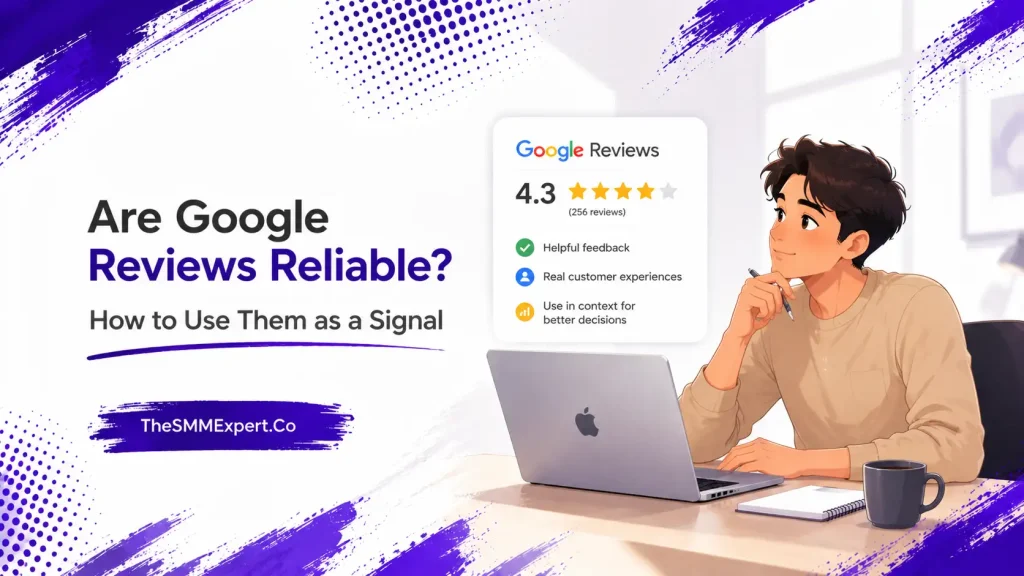
For daily choices, Google reviews are reliable with limits. Use them as a signal when the newest 10 text reviews repeat the same facts, but don’t treat a 1-to-5 star average as proof. If a profile has fewer than 10 text reviews, read them all before you decide.
The answer changes with review count, review dates, useful detail, and owner replies. It also changes when the choice has high risk, like medical care, legal help, expensive repairs, or any decision where an official license record matters more than public opinion.
Who can trust Google reviews
Google reviews are useful, not final proof, for someone choosing a local business before calling, booking, or visiting. You may already see the star score, total review count, dates, photos, and owner replies on the Google Business Profile. What you need isn’t a perfect truth test; you need a way to decide how much weight to give that public record.
A business owner may ask the same question because a few bad reviews hurt sales; that person needs review management, not a buyer’s check. A researcher may need clean survey data; Google reviews won’t give that because reviewers choose themselves. This page serves the customer comparing real options, and it assumes you can open the profile and read the visible reviews in Google Search or Maps.
This isn’t the right guide if you need to prove fraud, sue a reviewer, or force a review to disappear. Use Google’s reporting tools, legal help, or the right regulator for that.
Signals that change trust
Trust changes because not every star average is built from the same evidence. The score is only the front door; the review count, dates, text, and replies show whether there’s enough behind it.
The star average is the part that gets misread most often. A 4.9 rating from 7 reviews is easier to move than a 4.5 rating from 700 reviews, so look at the total count beside the stars. The useful review count varies by business type and location; read your exact count at the top of the Google Business Profile.
Review dates move trust up or down fast. A strong pattern in the newest visible reviews matters more than praise from a service, owner, or staff that may have changed. Read the date under each reviewer’s name and compare the newest comments with the service you want now.
Useful detail matters more than emotional tone. Reviews that name the service, product, visit reason, problem, or fix give you something to check. Short lines like “great place” or “terrible service” may be honest, but they carry less weight.
Repeated complaints deserve attention. If several low reviews point to the same billing issue, missed appointment, rude treatment, or poor repair, treat that as a risk. If each complaint is about a different personal preference, it may matter less.
Owner replies can raise or lower trust. A calm reply that addresses facts and offers a next step is better than silence or blame. Read replies under the lowest reviews, not only under praise.
How to check Google reviews
A good check is simple, but it needs an order. Don’t start with the nicest review, and don’t stop at the rating. Work from the visible record to the details, then decide how much risk you can accept.
-
Open the business’s Google Business Profile from Search or Maps and record the star score plus total review count shown at the top. Move on when you have both numbers.
-
Use the sort tool, when visible, to show the newest reviews first. Move on when the dates run from newest to older.
-
Read the newest 10 text reviews, or every text review if fewer than 10 are visible. Move on when you can name the repeated praise and repeated complaints.
-
Count how many of those reviews name a specific product, service, staff role, visit, or problem. Move on when your count separates detailed reviews from slogans.
-
Read up to 5 one-star and two-star reviews, or all of them if fewer than 5 are visible. Move on when you know whether the same complaint repeats.
-
Check the owner replies on those low reviews. Move on when the reply answers facts, offers a next step, or shows no reply.
-
Open 3 extreme reviewer profiles when the pattern still feels unclear. Move on when their public history looks mixed, thin, or hidden.
-
Compare the business name, address, services, and hours with one official source, such as its own website or a state license lookup. Move on when the basic facts match or you find a conflict.
-
Choose the lower-risk option when the evidence stays mixed. Move on when you can explain your choice in one sentence.
The hard call is whether you see a pattern or just noise. If the same specific issue appears across recent detailed reviews, treat it as a real risk; if the rating is high but the text is thin, check another source before you spend. Stop at public checks if you need to prove fraud or defamation; a lawyer or Google’s report flow handles that.
Review situations compared
The right move changes with the profile in front of you, so match the situation before you trust the star score.
| Review situation | Best move | Time or effort | Watch closely |
|---|---|---|---|
| High score, very few text reviews | Read every visible review before trusting | About five minutes if profile is short | One friend group or event dominating |
| Lower score, many older reviews | Separate current issues from old ones | Ten newest text reviews plus lows | Old repairs mixed with new service |
| New business profile with short history | Check official website and license records | One extra source and one call | Thin evidence, not automatic failure |
| Urgent visit or booking today | Call before you travel or pay | One short phone call | Hours, stock, and appointment availability |
| Big repair or paid project | Verify license, quote, and insurance | Extra calls and written paperwork | Deposits before written proof arrives |
| Mixed reviews from recent visitors | Compare low claims with high claims | About 10 to 15 minutes | Same complaint showing more than once |
| Several branches with similar names | Open the exact location profile | Two profile checks, maybe one call | Wrong address, photos, or phone |
Good Google review checks
A strong check starts before you read the dramatic comments. First, you pin down what the profile actually shows: score, count, dates, text, photos, and replies. The trade-off is speed versus certainty; a quick look is fine for a low-risk lunch, but it’s weak for a repair deposit or long appointment.
Start with the record
The record tells you how much evidence exists. A profile with a high score, low count, and short text gives less support than a profile with a lower score and many detailed comments. Check the total count first, then read the newest text before you open photos or owner replies.
Ignore noise on purpose
Good checks leave out things that are easy to overread: one angry rant, one perfect slogan, or one photo that doesn’t show the service you need. While reading, watch whether the same claim appears in at least 2 detailed reviews. If only one person says it, keep it as a possible issue, not a pattern.
Google review red flags
These signs don’t prove fraud; they tell you which check to do before you trust the score.
| What you notice | What it usually means | What to do first | How to stop it happening again |
|---|---|---|---|
| Same vague praise repeats | Text gives little usable evidence | Read newer detailed reviews first | Weigh specific text over stars |
| Rating high, almost no text | Score has weak context | Read every visible comment | Favor profiles with detailed comments |
| Old complaint appears again now | Same issue is repeating | Ask about that issue directly | Check dates before booking |
| Owner blames or mocks reviewers | Complaint handling looks poor | Compare other low reviews | Prefer calm factual replies |
| Photos show another branch | Location needs checking | Match address, photos, and phone | Use the exact branch profile |
| Reviews arrive in tight cluster | Short-term pattern dominates score | Sort by newest dates | Check another independent source |
Google review rules
The policy governing content on Google Maps says contributed content should reflect real experiences and information, and it bars fake engagement. That means a review can break platform rules even when it sounds useful to you.
In the US, the Federal Trade Commission enforces rules against fake reviews, undisclosed insider reviews, and review suppression. Other countries use their own consumer-protection agencies, so check the regulator for your country when money or legal rights are involved. If you think a review is false, paid, or damaging, don’t investigate the reviewer yourself; report it in Google and speak with a lawyer or regulator.
Review cost and effort
The real cost is time and risk, not the price of reading reviews. A light check takes about 5 to 10 minutes when the profile has 20 or fewer text reviews. A high-cost repair, lease, medical choice, or legal service needs more than public comments.
Picking the highest star score without reading the lowest reviews can cost you a bad booking, a wasted trip, or a deposit dispute. The money side changes by business and city, so compare the written quote, cancellation terms, and any official license record instead of guessing from stars.
Spend your time where the loss would hurt more. A quick meal and a roof repair don’t deserve the same review check.
Keep Google review notes
Keep a small record when the choice matters: date checked, star score, review count, and the repeated points you found. A note in your phone is enough. It helps because Google profiles change as new reviews appear, old ones are removed, or businesses update details.
Check the profile again before you pay, travel, or sign if the booking was made earlier and the choice still matters. The sign it needs attention is a new cluster of low reviews, a changed address, or owner replies that no longer match the complaint. Fix it by rereading the newest reviews and calling with one direct question.
You don’t need a fresh full check for every small errand. Use the note when delay, money, travel, or safety makes a changed pattern matter.
When Google reviews aren’t enough
Google reviews are the wrong main tool when the result depends on a license, a legal right, or a safety risk. For a doctor, lawyer, daycare, contractor, or financial adviser, use the official licensing board, written terms, and direct questions first. Reviews can only show service clues.
They’re also the wrong path when you’re trying to remove a review, prove fraud, or answer a threat. Use Google’s reporting option, keep records, and speak with a lawyer or the right regulator. If the issue involves danger, wiring, gas, health, or emergency travel, stop reading reviews and contact a qualified professional or emergency service.
Check Google reviews first
Start with the newest visible Google reviews and look for repeated, specific points before you decide. You should end with a clear trust level, shown by the same issue or praise appearing across different reviews. Stop and get professional help when the choice involves legal risk, licensed work, or suspected fraud.
Frequently asked questions
These questions cover the cases that still trip up a quick review check. Use the short answer first, then look at the live profile because the visible record can change.
Can businesses delete Google reviews?
No, businesses can’t directly delete customer reviews from their own Google profile; they can report a review to Google when they believe it breaks policy. Google decides whether it stays. If a business says it removed bad reviews itself, treat that claim with care.
Why do Google reviews disappear?
Reviews disappear when Google removes policy-breaking content, the reviewer deletes it, or the visible profile changes after review processing. The business may not know the exact reason. If your decision relies on one missing review, don’t rely on that review alone.
How long should I spend reading Google reviews?
Spend 5 to 10 minutes for a low-risk local choice when the profile has enough text to read, and spend longer when the loss would hurt. If there are fewer than 10 text reviews, read all of them and check another source.
Is it safe to trust a 5-star Google rating?
Yes, a 5-star rating can be safe for a low-risk choice when the reviews are detailed, recent, and from different public profiles. It isn’t enough for licensed work, medical care, legal help, or large payments. Check official records for those.
What happens if a Google review is fake?
Google may remove a fake review when it breaks platform policy, but you usually won’t get a full explanation as a reader. For your own choice, ignore reviews that lack details, copy the same wording, or don’t match the business.
Does it matter how many Google reviews there are?
Yes, the total review count matters because a small count can swing faster than a large count. Read the exact count at the top of the profile. A high score with very few reviews is a weaker signal than a detailed pattern.
 Written byAbdul HalimAbdul Halim writes about online reputation management and the challenges businesses face when trying to build trust online. His content covers customer feedback, online reviews, how people see brands, reputation monitoring, negative feedback, and ways to maintain a strong online presence. Abdul shares simple steps businesses can use to learn what customers say, respond to reputation concerns, build credibility, and earn lasting trust. He wants to help people understand reputation management more easily and give businesses ideas for keeping and growing their online reputation.LinkedIn