On this page
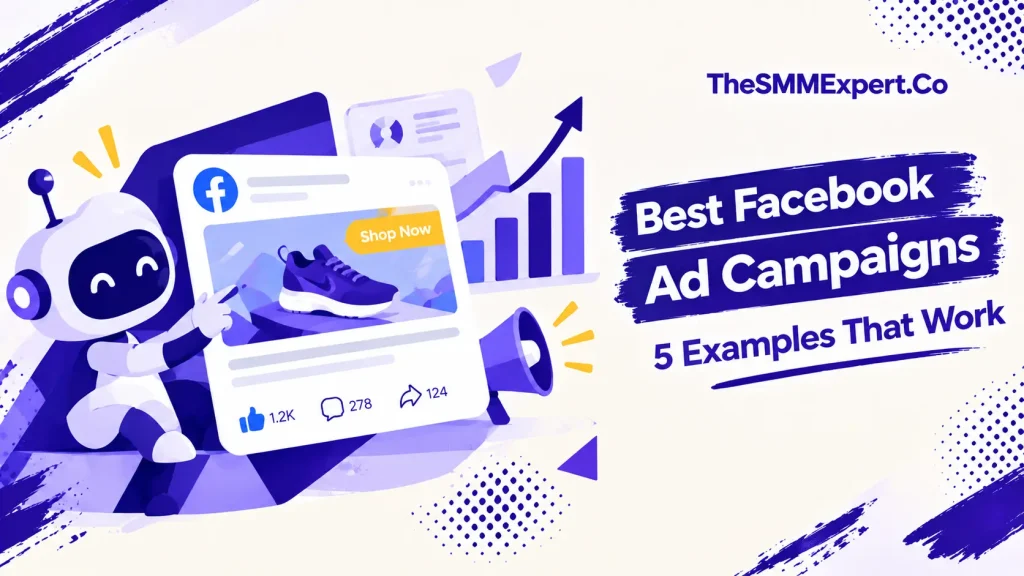
Airbnb referral ads, Spotify Wrapped, Coca-Cola’s Share a Coke, Nike’s Equality campaign, and the ALS Ice Bucket Challenge are strong examples of the best Facebook ad campaigns because each pairs a clear idea with a clear audience action. They pursue different results, including app installs, bookings, product sales, brand attention, and donations, so “best” depends on your goal. Study each campaign’s message, creative, audience promise, and measurable action rather than copying a global brand’s reach.
Best Facebook ad campaign examples
The table shows what each campaign is best at and the public example most people will recognize.
These are broader social campaigns, not ready-made Facebook ad templates. Use them as creative references, then match each idea to the action you need: a referral, share, sign-up, purchase, or donation. If the goal is reach, a memorable concept may carry the ad. If the goal is leads or sales, add a specific audience, offer, and next step; otherwise attention won’t become action.
| Campaign | Best for | Recognizable example |
|---|---|---|
| Airbnb referral campaign | Driving customer referrals | Invite friends, earn travel credit |
| Spotify Wrapped | Personalization and sharing | Your year in music |
| Share a Coke | Product personalization | Names on Coke bottles |
| Nike Equality | Brand purpose and attention | Equality campaign films |
| ALS Ice Bucket Challenge | Participation and donations | Ice bucket videos |
| Dove Real Beauty | Emotional brand storytelling | Real Beauty portraits |
Airbnb referral campaign
Airbnb’s referral campaign uses existing customers to bring new people to the service, so it does something a standard booking ad doesn’t: it connects customer acquisition with a personal recommendation. The basic idea is simple. A current user receives a referral invitation, shares it with another person, and both sides may receive a benefit under the offer’s rules.
This approach suits a service that already has active customers and a clear way to track invitations. It’s less useful for a brand with no customer base, no referral system, or a product people rarely discuss with friends. Before copying the idea, check whether your website or app can create unique referral links and record completed actions.
The strongest part of this campaign model is the connection between the message and the action. A person doesn’t just see “try Airbnb.” They see an invitation from someone they know, with a direct path to sign up or book. That personal context can make the ad feel more relevant than a broad awareness message.
It’s also easier to judge than a campaign built only for attention. You can compare invitations sent, new accounts, completed bookings, and the cost of each new customer. Don’t count a referral as successful merely because someone clicked. The customer has to complete the action that creates value for your business.
Airbnb’s model is good for:
- Generating qualified leads: A friend’s recommendation can filter for people who already have some interest in the service.
- Increasing first purchases: A reward can give a new customer a reason to complete the first booking.
- Encouraging customer sharing: The campaign turns existing users into a distribution channel.
- Testing offer value: Different referral rewards can be compared through completed conversions.
The trade-off is the reward cost. Giving credit to both people can improve response, but it reduces the amount you keep from each new customer. If the average customer buys only once, calculate the reward against the first purchase, not an assumed future relationship.
A common mistake is to promote the reward without explaining the conditions. People may click, then discover that the credit has an expiration date, a minimum booking value, or a limited use. That confusion can reduce trust and leave you paying for support requests instead of completed sales.
This campaign isn’t for a business that can’t protect referral quality. If one person can create unlimited accounts or claim the offer without becoming a real customer, the campaign can attract abuse. Set clear eligibility rules and make sure your booking, payment, or customer system can enforce them.
A practical example is a local language school offering an existing student a referral link for a friend’s first paid class. The ad should show the reward, the first-class offer, the deadline if one exists, and the exact button that takes the friend to enrollment.
Spotify Wrapped campaign
Spotify Wrapped uses a person’s own listening history to create a personalized story, so it does something a normal music ad doesn’t: it gives each user content that feels made for them. The campaign works because the audience isn’t only watching a brand message. People are seeing their own songs, artists, habits, and memories presented in a shareable format.
This model suits businesses with useful customer data and a clear way to turn that data into a visual result. It can work for fitness apps, shopping services, learning platforms, and financial tools. It won’t suit a company that has little customer activity or can’t explain how personal data is collected and used.
Spotify’s campaign turns private usage into public sharing. A person can post a result, and that post can lead friends back to Spotify. The shared content carries the user’s identity, while the brand remains visible through the design and message. That’s different from asking people to share a generic product photo.
The format also gives the campaign a natural time marker. A yearly summary creates a reason to return at a specific period, while a normal ad may disappear from memory after the impression. You can adapt the timing to your business, but the result must feel complete enough to share.
Spotify’s campaign is good for:
- Increasing social sharing: Personal results give people something about themselves to show.
- Strengthening product habit: A summary reminds users how much they’ve used the service.
- Creating repeat attention: A recurring report gives people a reason to return.
- Making data visible: Usage information becomes a simple story instead of a hidden dashboard.
The main trade-off is privacy and complexity. Personalization can make an ad more relevant, but customers may react badly if the data source feels unclear or overly personal. Explain the data used, give users control where needed, and avoid displaying sensitive information in an ad.
This model also needs enough activity to create an interesting result. If a user has only one purchase or one session, the output may feel empty. In that case, a simple progress update may work better than pretending the customer has a rich personal story.
A common mistake is copying the colorful design without copying the useful personalization. Bright graphics alone don’t make a Wrapped-style campaign. The customer needs to recognize the result as their own, and the message needs to give them a reason to share or return.
The campaign isn’t for a business that has no consent process or no reliable customer records. If you can’t explain where the data came from, use a non-personal creative instead. You can still ask customers to choose preferences, but don’t imply that the business knows more about them than it really does.
A practical example is a language-learning app showing a user the number of lessons completed, words practiced, and course milestones reached during a defined period. The ad should lead to a personal results page, not to a generic home page.
Share a Coke campaign
Share a Coke uses names and personal identity on the product, so it does something a standard product ad doesn’t: it gives people a reason to search, choose, and share a specific package. The product stays familiar, but the name changes the shopping task from “buy a soda” to “find my name” or “find a friend’s name.”
This campaign suits products that can support personalization without making the buying process too difficult. It can also help a business create user content because customers may photograph the package and tag another person. The model is less suitable when customization is expensive, slow, or likely to create delivery problems.
The campaign’s strength is its simple social prompt. “Share a Coke” connects the product with another person, so the message doesn’t need a complicated explanation. A Facebook ad can show the package, the personal detail, and the sharing action in a few seconds.
It also creates several audience angles. One ad can target people looking for their own name, while another can focus on gifts, family members, coworkers, or friends. Each audience sees the same central idea but a different reason to act.
Share a Coke is good for:
- Making a familiar product feel new: A name or personal detail changes how people notice the package.
- Encouraging user-generated content: Customers may photograph the item and share it with others.
- Supporting seasonal buying: Personalized products can fit birthdays, holidays, or social events.
- Improving creative recall: A simple name-based idea is easier to remember than a long product list.
The trade-off is availability. If the name a customer wants isn’t offered, the campaign can create disappointment instead of excitement. Show the available options clearly and don’t promise full personalization unless the product truly supports it.
A common mistake is using a personal message that doesn’t match the product experience. If the ad says “create your own,” but customers can only choose from a small preset list, they may feel misled. Use precise wording such as “find a name” or “choose from available designs” when that’s the real offer.
This model isn’t for a product that can’t be identified quickly in a crowded image. If the personalized detail is too small to read on a phone, the creative loses its main reason to stop scrolling. Use a close product shot, large text, and one clear action.
For Facebook placements, check that the name, offer, and button remain readable on mobile screens. Meta’s Ads Guide formats can help you compare the available placement sizes and creative requirements before you produce several versions.
A practical example is a bakery selling custom cookie boxes with a customer-selected first name. The ad can show three finished boxes, state the order deadline, and send people directly to the personalization step.
Nike Equality campaign
Nike’s Equality campaign uses a clear social message to build brand meaning, so it does something a product-only ad doesn’t: it asks the audience to connect the brand with a value. The creative typically depends on strong visuals, athletes, short statements, and a message that works even before a viewer reads a long caption.
This model suits established brands with a recognizable voice and a real connection to the issue they discuss. It can help a company build attention and conversation, but it’s risky for a business that only uses social causes when it wants more sales. The audience may question the message if the company’s actions don’t support it.
A purpose-led campaign needs a narrow idea. “Support equality” is broad, while a specific message gives the audience something concrete to understand. The ad should show what the brand believes, who it supports, and what role the viewer can take without making claims the business can’t support.
Nike’s model is good for:
- Building brand association: A repeated value can shape how people remember the company.
- Reaching emotion-driven audiences: Stories and human faces can make a message feel personal.
- Supporting public conversation: A clear statement can encourage comments and shares.
- Introducing a wider brand identity: The campaign can show what the company stands for beyond its products.
The trade-off is weaker short-term attribution. A viewer may remember the message without buying that day. If your only goal is immediate revenue, a product or lead campaign may give you a clearer result. If you use a purpose campaign, measure attention and brand actions separately from direct sales.
A common mistake is making the cause larger than the company’s role. A small business doesn’t need to solve a national issue in one ad. It can support a local program, show a real contribution, and explain what the purchase or participation helps fund.
This campaign type isn’t for a company that hasn’t checked its claims, partners, or internal behavior. If the message creates a legal, reputation, or customer-trust risk, ask a qualified communications or legal professional to review it before publication. Don’t use a social issue as a shortcut to reach.
A practical example is a sports club highlighting free training sessions for girls in its local area. The ad can show the coaches and players, state the session details, and explain how people can register or support the program.
ALS Ice Bucket Challenge
The ALS Ice Bucket Challenge uses participation as the central creative, so it does something a normal donation ad doesn’t: it gives supporters an action they can film, share, and pass to other people. The challenge became widely recognized through social platforms, including Facebook, because participants posted videos and nominated others.
This campaign suits causes and brands with a safe, easy-to-understand action. The action must be simple enough to copy, visible on video, and connected to a clear next step. A campaign that asks for complex preparation or expensive equipment won’t spread in the same way.
Give people a non-video way to join, such as a direct donation or sign-up, so privacy, disability, or limited bandwidth doesn’t block them.
The challenge model has two linked parts. First, people do something that creates attention. Second, they donate, sign up, buy, or learn more. If the first action gets views but the second action is unclear, you may receive reach without the result you need.
Use one clearly named destination and track completed actions there. Views and nominations show attention, not necessarily donations or sales.
The ALS campaign is good for:
- Encouraging participation: A visible action gives supporters more than a passive donation button.
- Creating shareable video: Participants provide real creative from their own phones.
- Reaching personal networks: Nominations can move the message between connected groups.
- Making a cause easier to explain: The action shows support before the caption explains it.
The trade-off is control. User-created videos can make a campaign feel real, but you can’t control every background, caption, claim, or variation. Give participants clear safety and brand guidance, and moderate content where your platform rules require it.
Ask people to get permission before filming anyone else, especially children or identifiable people in the background. Provide captions and text instructions for accessibility.
A common mistake is copying the stunt without checking safety. If a challenge uses water, heights, food, vehicles, chemicals, or physical strain, the risk can outweigh the marketing value. Replace unsafe actions with a simple, low-risk behavior and ask a relevant safety professional about any activity that could cause harm.
This model isn’t for a business that has no reason for people to nominate others. A forced challenge can look artificial, especially when the action has no link to the product or cause. The participation should make sense even if the viewer never buys anything.
A practical example is a community animal shelter asking supporters to post a short video showing a pet-friendly activity, tag one friend, and donate through the shelter’s official page. The ad must state the donation destination and avoid claiming that every post creates a donation unless that promise is true.
Other Facebook campaign examples
The remaining examples use different creative ideas, so choose them only when their structure matches your goal.
- Dove Real Beauty: This campaign uses real people and appearance-related stories instead of polished product-only images. It suits beauty, wellness, and personal-care brands with genuine customer stories and a clear way to obtain permission. Reach for it when trust and emotional connection matter more than showing a technical feature.
Get written consent before using a person’s image, story, or words in a paid ad. A public post isn’t automatically permission for commercial use. Don’t use “real” as a label for actors presented as ordinary customers, or turn one person’s experience into a promise for everyone.
- GoPro user-generated content: GoPro’s marketing often highlights footage made with its cameras, showing the result before explaining the product. This suits equipment brands where customers can demonstrate performance through video.
Use it when you can obtain rights and verify that the content came from the product being promoted. Ask for the original file and how it was captured. It isn’t a good fit if your customers rarely create visual content or if the clip needs heavy staging to look usable. If it supports a performance claim, make sure the footage shows that claim rather than merely suggesting it.
How to choose a Facebook campaign
Start with the result you need, because the same creative can be strong for awareness and weak for sales. Pick one primary action before choosing a model: a purchase, a qualified lead, a referral, or a share.
If you need new customers from existing customers, choose the Airbnb referral campaign model. If you need people to return and share personal results, choose Spotify Wrapped. If the product itself can carry a name or custom detail, choose Share a Coke. Don’t lead with referrals if you can’t connect a new signup or purchase to the referring customer.
Your available customer data is the second deciding factor. If you have reliable first-party activity and clear permission to use it, personalized creative can point to Spotify Wrapped.
If you don’t have enough data, use a visible product idea such as Share a Coke, or use a customer story with permission. When records are stale or incomplete, simplify the message instead of pretending to know a customer’s preferences. Permission must cover this use and channel.
Your brand position also matters. A company with a real public commitment and a clear supporting action may fit the Nike Equality model. A business that only wants quick purchases should usually start with a product, lead, or referral campaign instead of making a broad social claim.
Consider the amount of content your audience can create. If customers can safely film an action and you can moderate the results, the ALS Ice Bucket Challenge model may fit. If participation would be difficult, use a controlled video or product image instead.
Budget changes the choice, too. Referral and user-generated campaigns can reduce the need for every ad to be produced by your team, but they still need tracking, review, and customer support. Purpose-led campaigns may need more planning and produce less direct attribution, while product-led campaigns can be easier to connect with a sale.
If you already have a strong product and repeat customers, combine models carefully. For example, use a Share a Coke-style personalized offer in a Spotify Wrapped-style customer summary, but don’t combine every idea in one ad. Too many messages make the action unclear.
The value that varies most is your conversion rate after the click, and you can find your exact figure on completed purchases, qualified leads, or donations rather than reach alone. A campaign with lower reach can be the better choice when it produces more profitable actions.
What to do first with Facebook campaigns
First, choose one business result. Match it with one campaign model: referrals for new customers, personalization for sharing, purpose for brand meaning, or participation for community action. Define the result as a completed booking, purchase, signup, or donation, and decide where that completion will be recorded.
Before spending, test the path from ad to action. Use a tracked destination or form, and confirm that the completion appears in your own records rather than only in Facebook’s reporting. If you can’t connect activity to the result, treat clicks and views as signals, not proof. Keep the promise and next step consistent between the ad and landing page, and make sure the audience can realistically take that action.
Before increasing the budget, verify that the offer, page, form, and tracking record the intended next step. Change one major variable at a time, and seek qualified help before publishing creative involving physical risk, sensitive data, regulated claims, or promises you can’t fulfill. Next, fix measurement in your own records and run a controlled test.
Frequently asked questions
What makes a Facebook ad campaign successful?
A clear offer, relevant creative, and measurable action make a Facebook ad campaign successful. Measure the action closest to your goal, such as completed checkout for ecommerce or qualified appointments for a service, because views alone don’t prove success. Review the audience, placement, message, and landing page together; a slow or confusing page can undermine a good ad.
Can small businesses use famous Facebook campaign ideas?
Yes, small businesses can adapt famous campaign structures without copying their size or budget. A local bakery might use personalized packaging, while a community club might use safe customer videos. Keep the audience and action local, support claims with real evidence, and track completed results. Start with one audience and one action rather than trying to reach everyone.
How long should a Facebook ad campaign run?
Run a Facebook ad campaign until it collects enough completed actions to support a decision, because there’s no honest universal number of days. A small-budget purchase campaign may need longer than a local event campaign with a fixed date. Keep the audience, budget, creative, and offer consistent while measuring.
Is it safe to copy a viral Facebook challenge?
No, copying a viral Facebook challenge isn’t automatically safe. Challenges involving water, movement, food, traffic, heat, or equipment can create injury or property risks. Use a simple indoor action without special tools or dangerous movement, and explain any donation or purchase step accurately. If the activity could reasonably injure someone or create legal exposure, seek qualified safety or legal advice before publishing.
What happens if a Facebook ad gets likes but no sales?
Likes without sales usually mean the campaign is attracting attention but not moving people through the buying path. Check that the ad promise matches the landing page, the offer is clear, checkout works on a phone, and the conversion event records correctly. If revenue is the goal, test a clearer benefit, price, proof, or next step rather than judging engagement alone.
Does it matter if an ad uses video or images?
Yes, format matters because it affects how quickly people understand and respond. Video can show a challenge, product use, or customer story, while a still image can clarify an offer or product detail. Choose video when movement explains value and an image when one visual and action suffice. Check versions on a phone.
 Written byMatthew WilliamsMatthew Williams is a digital marketing writer and social media expert with over 8 years of experience. He works with Facebook, Gmail, and online reputation problems. He writes clear, useful content to help people, creators, and businesses fix Facebook problems, keep their pages safe, and use Meta’s tools more effectively. His work talks about Facebook Ads, Business Manager, keeping your pages safe, growing your audience.