
Online review management is an ongoing process to monitor, earn, respond to, and analyze customer reviews across different platforms like Google, Trustpilot, G2, Yelp, and others. Public reputation reflects your service quality and allows future customers to make their decision.
Most of your happiest customers stay silent, while the angriest ones stay vocal to show frustration. Encouraging satisfied customers to share their experience and handling frustrated customers properly can improve your revenue.
Done well, you can turn your satisfied customers into public advocates, catch major problems with your services, feed trust signals to search results, and help AI assistants cite your business. This guide will cover everything you need, including the review lifecycle, directories, getting more reviews, responding properly, legal rules, and AI-driven discovery.
What Online Review Management Actually Is?
Online review management is a repeatable, deliberate practice for businesses to oversee and shape the public perception or conversation about your business. It is not a one-off task or a panic response. It is a continuous process consisting of four stages.
- Monitor – Know when a review is posted on every platform you are listed on. A review, especially a negative one, left unanswered for weeks does more damage than handling it in the first hour.
- Earn – Use strategies to invite satisfied customers to share their experience to reflect your service quality.
- Respond – Reply to all the good and bad reviews to build trust and remove confusion. Remember that your future customers are seeing your responses.
- Analyze – Treat the reviews as your business intelligence. Handle recurring complaints properly to improve services and focus on recurring praises to gain more customers.
Most businesses avoid the fourth stage, but that’s where the real value is. Response is damage control but not a strategy. The winners consider the feedback as an improvement signal to fix the business.
Review management vs. reputation management vs. ORM
People often use these three terms interchangeably, but these are not the same things. Understand this table carefully to find out the differences.
| Term | Scope | What it covers |
|---|---|---|
| Review management | Narrowest | Collecting, monitoring, responding to, and displaying customer reviews. |
| Online reputation management (ORM) | Wider | Everything review management includes + social mentions with forum and Reddit discussion, news coverage, crisis handling, and branded-search control. |
| Reputation management | Widest | Managing the overall perception of a business across online and offline channels, including customer experience, brand messaging, and PR.
|
In simple terms, review management is a subset of reputation management, but this is the foundation. Without this, online reputation management is worthless. Your customers will check the reviews first, then they will care about other things.
Things you need to understand that you will encounter throughout the content.
Social proof – People’s trust in your business.
Review velocity – How fast you get new reviews.
Review recency – How fresh your reviews are.
Sentiment analysis – Machine reading the tone of your reviews.
NAP consistency – Matching address, name, and phone listings.
The local pack – Google’s top-three local block.
Review schema – Markup used to show star ratings in snippets.
Service recovery – Turning a negative review into a positive one.
Review gating – Routing only satisfied customers to public platforms.
GEO – Getting cited on AI answers.
Knowing these terms will help you understand the context and article better.
Why Reviews Move Money: The 2026 Data
Reviews are not optional anymore. The intensity and importance have increased. Here are the reasons why reviews move money in 2026.
- Almost every customer reads reviews nowadays. A study shows that 97% of consumers read reviews before choosing a local business. Besides, the percentage has increased from 29% to 41% for people who always read reviews before making a decision. The jump indicates the commitment of readers are growing in the past year. Another study suggests that consumers spend around 13 minutes reading reviews before deciding. The number is huge, and having good reviews will speed up decision-making.
- The rating bar has risen a bit, but perfection starts to backfire. Research finds that 31% of consumers use businesses with a 4.5-star rating or higher. It was 17% in the earlier year. 80% of people avoid businesses with ratings below 3 stars. 47% don’t consider a business with fewer than 20 reviews. Flawless scores are also a liability. 96% of consumers look for a negative review in the review section.
- 74% check reviews written only in the last three months. Recency and speed are now important. 32% of those consumers only trust reviews from the past 2 weeks.
- An increase in star rating increases revenue by 5- 9%. That means a business with a 4.5-star rating will get more revenue than a business with a 3.5-star rating. Products with five or more reviews are likely to be sold 270% more. 94% of people said that a negative review made them avoid the business.
- About 5% of businesses respond to all reviews, and 97% of consumers who read reviews also read responses. 56% said that a response has changed their perception of the company. 60% of consumers lose trust in brands that use AI to respond to reviews.
The above points clearly indicate that reviews have a major impact on your business. That’s why getting reviews to manage your reputation is important. If you are not confident about your strategy to improve your reputation, it is better to consult a review management expert like TheSmmExpert and set new strategies for more reviews.
The Complete Review-Site Directory (~40 Platforms Worldwide)
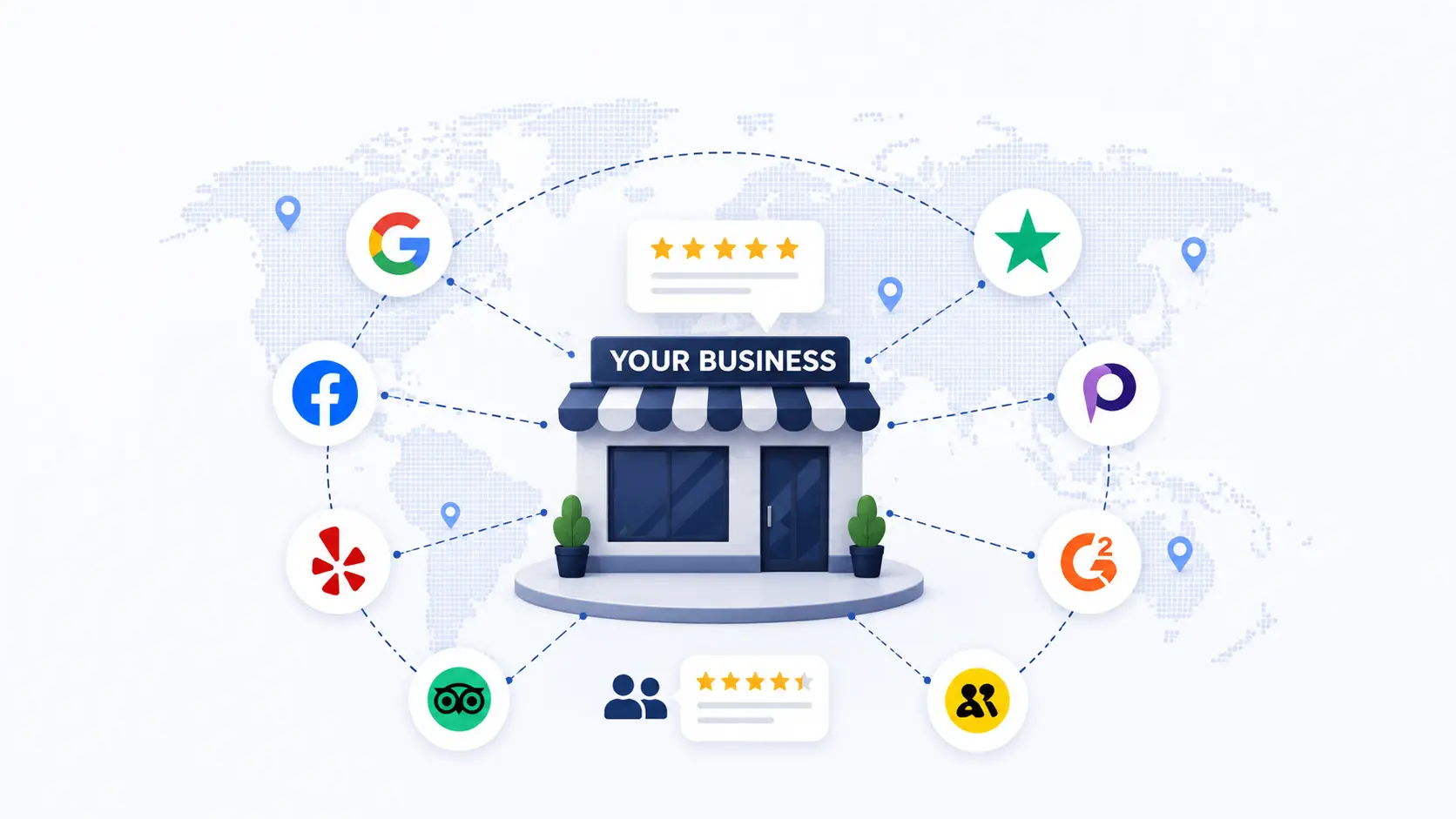
There are many review sites, but only a few sites matter. Choosing the right one is important, and you should choose one based on the type of business you are in. For example, choose Tripadvisor if you are in the travel business, choose G2 for SaaS, and choose Google for local business. Let’s check all those sites to choose the right one.
Universal/general-purpose
| Platform | Best for | Request reviews? |
|---|---|---|
| Google Business Profile | Local businesses across the world. A good platform for local search and AI answers. | Yes |
| Facebook (Recommendations) | For almost all consumer businesses; excellent social distribution. | Yes |
| Trustpilot | Mainly for E-commerce. But good for online services, D2C brands in Europe. | Yes (with rules) |
| Better Business Bureau (BBB) | Trust-sensitive US/Canada services; higher-intent buyers. | Yes |
| Yelp | Local services in the US. | No. Yelp discourages solicitation. |
| Bing Places | Feeds Microsoft Copilot. Good for a secondary option. | Yes |
| Apple Business Connect / Apple Maps | Fastest-growing, good for businesses with iPhone and Siri user customers. | Yes |
| Nextdoor | Neighborhood-level word-of-mouth, hyperlocal. | Limited |
| ConsumerAffairs | Brands (US) across different consumer categories; higher-intent buyers. | Yes |
| Sitejabber | General consumer reviews for online businesses & stores. | Yes |
Software, B2B & SaaS
| Platform | Best for | Request reviews? |
|---|---|---|
| G2 | SaaS and B2B software. | Yes |
| Capterra | SMB software buyers. | Yes |
| TrustRadius | Verified, in-depth enterprise-software reviews. | Yes |
| GetApp | SMB software discovery. | Yes |
| Software Advice | Guided software selection. | Yes |
| Gartner Peer Insights | Enterprise IT buyers; highly credible. | Yes (verified) |
| Product Hunt | Startups, launches, early-adopter feedback. | Yes |
| Clutch | Agencies & B2B service providers; verified interviews. | Yes |
| GoodFirms | B2B service providers and software. | Yes |
| SaaSHub | Software discovery & alternatives. | Yes |
| SourceForge | Business software & Open-source. | Yes |
Travel, hospitality & restaurants
| Platform | Best for | Request reviews? |
|---|---|---|
| Tripadvisor | Hotels, tours, restaurants, attractions. | Yes |
| Booking.com | Accommodation. | Automated only. |
| Expedia | Accommodation and travel packages. | Automated only. |
| OpenTable | Restaurants. | Automated only. |
| Zomato | Restaurants (dominant in India, UAE). | Yes |
| Hotels.com | Accommodation. | Automated only. |
| HomeToGo | Holiday homes & Vacation rentals. | Automated only. |
Healthcare
| Platform | Best for | Request reviews? |
|---|---|---|
| Healthgrades | Physicians and hospitals (US). | Yes |
| Zocdoc | Doctors and dentists (US). | Automated only |
| RateMDs | Doctors (North America). | Yes |
| Vitals | US physicians. | Yes |
| Doctolib | Doctors (France, Germany, Italy). | Automated only |
| WebMD | Physicians & healthcare providers (US). | Yes |
| RealSelf | US Cosmetic & aesthetic procedures. | Yes |
Home services & trades
| Platform | Best for | Request reviews? |
|---|---|---|
| Angi (formerly Angie’s List) | Home-service contractors (US). | Yes |
| HomeAdvisor | Home-improvement leads and reviews (US). | Yes |
| Houzz | Renovation, remodeling, design pros. | Yes |
| Thumbtack | Local service professionals. | Yes |
| Checkatrade | UK tradespeople. | Yes |
| Bark | Local service professionals in US or UK. | Yes |
| Networx | US Contractor leads & reviews. | Yes |
| BuildZoom | US contractors & remodeling pros. | Yes |
| TrustedPros | Contractors (Canada). | Yes |
Automotive
| Platform | Best for | Request reviews? |
|---|---|---|
| Cars.com | Vehicle & dealership listings. | Yes |
| DealerRater | Salesperson & dealership reviews. | Yes |
| Edmunds | Vehicle & dealership research. | Yes |
| CarGurus | Marketplace & dealership reviews. | Yes |
| AutoTrader | Dealer reviews and vehicle marketplace. | Yes |
Employer & company reputation
| Platform | Best for | Request reviews? |
|---|---|---|
| Glassdoor | Employer salaries, reviews, interview insight. | Yes (from employees) |
| Indeed | Employer reviews + recruiting. | Yes |
| Comparably | Company culture & compensation. | Yes |
| kununu | Employer reviews (Germany/Austria/Switzerland). | Yes |
| AmbitionBox | Employer reviews in India. | Yes |
| Seek | Jobs and employer reviews (Australia/NZ). | Yes |
| JobStreet | Employer reviews & jobs for Southeast Asia. | Yes |
Real estate, apps & e-commerce
| Platform | Best for | Request reviews? |
|---|---|---|
| Zillow | US real estate agents & lenders. | Yes |
| Realtor.com | US agents & listings. | Yes |
| Apple App Store | iOS apps. | Yes (in-app prompt) |
| Google Play | Android apps. | Yes (in-app prompt) |
| Etsy | Handmade, vintage, & craft sellers. | Automated only |
| HomeLight | Real estate agent matching & reviews (US). | Yes |
| RealEstateAgents.com | Agent matching & reviews (US). | Yes |
| REW (Real Estate Webmasters) | Agent reviews & sites for real estate. | Yes |
| Reviews.io | Online business and e-commerce reviews. | Yes |
| Review Centre | Online store and general consumer reviews. | Yes |
Legal
| Platform | Best for | Request reviews? |
|---|---|---|
| Avvo | US Lawyers & attorneys. | Yes |
| FindLaw | US Attorney directory & reviews. | Yes |
Weddings, beauty, entertainment & solar
| Platform | Best for | Request reviews? |
|---|---|---|
| WeddingWire | Wedding venues and vendors. | Yes |
| MakeupAlley | Cosmetic and beauty product reviews. | Yes |
| IMDb | TV, film, & entertainment titles. | Automated only |
| BookMyShow | Movies & events in India. | Yes |
| EnergySage | US Solar installers & quotes. | Yes |
| SolarReviews | US solar companies & products. | Yes |
Agency & B2B directories
| Platform | Best for | Request reviews? |
|---|---|---|
| UpCity | Marketing & service agencies for the US or Canada. | Yes |
| DesignRush | Service and agency providers. | Yes |
| Sortlist | Agencies in Europe & globally. | Yes |
| TopSEOs | Digital marketing firms. | Yes |
| CustomerLobby | US local service-business reviews. | Yes |
| Chamber of Commerce | US local business listings & reviews. | Yes |
Key regional platforms
| Platform | Region | Notes |
|---|---|---|
| Yandex | Russia/CIS | Local search & maps. |
| Naver | South Korea | Leading search & local-review engine. |
| Kakao Map | South Korea | Leading maps & reviews platform. |
| ProvenExpert | Germany/DACH | Seal-based, aggregated reviews. |
| eKomi | Europe | Transaction-based, verified reviews. |
| HelloPeter | South Africa | Top consumer-review platform. |
How to Earn Reviews – Solving the Silence Problem
Happy customers rarely review your business if not prompted. Unhappy customers always do, and this is a common scenario you need to face while running a business. The fix is not manipulation. It is about removing friction and asking at the right time. Let’s check the complete playbook.
Timing beats persuasion
The best lever is timing. When you ask matters more than persuasion. A customer who just had a good experience is happy to leave a review if asked nicely. A request sent five days after the service feels like homework. So ask right after a positive interaction, purchase, or problem-solving.
Use the channel your customers already live in
Text always wins since SMS has a 98% open rate. You can also use Email if you think your customer is more present online. QR codes can work on table tents, receipts, or checkout places. If you are asking personally, keep it short and natural.
Remove every ounce of friction
Friction prevents customers from leaving reviews. Every extra tap loses people. Send a direct, one-click link that will bring the customers to your review profile. Make sure the customers do not have to search for your profile.
Make it everyone’s job
Train your employees and customer care unit to ask for reviews. Every customer-facing team should ask at the review-worthy moment. Build the system so that it never depends on one person.
What NOT to do – this is where businesses get burned
It is important to know what not to do more than what to do. Never do these things.
- Never incentivize reviews. Most platforms discourage incentivizing reviews since this is a misuse of the platform. Avoid this.
- Never have your friends, staff, family, or insiders write reviews without disclosing the relationship.
- Never ask only satisfied customers. Many platforms like Trustpilot warn users not to ask only satisfied customers.
- Do not force your customers to write positive reviews for your business.
- Never ignore negative reviews since this is your chance to improve your business and attract more potential customers.
Earning reviews honestly is the game, and it will help you in the long run. Make sure to follow the ethics.
The Review-Gating Trap and the FTC Rule That Changed Everything
What review gating is
Review gating is when a business only pushes satisfied customers to leave positive reviews and tries to avoid reviews from unsatisfied customers. This creates a bias in its business profiles with overwhelmingly positive responses. This raises questions of honesty and transparency on the part of the business, hiding the true customer review from potential customers. Major platforms like Google are implementing policies that stop businesses from taking advantage of review gating to their customers and creating an honest impression.
Why it’s illegal in the US
Due to the increase in fake reviews and review-gating, the FTC established a Rulebook for Fake Reviews and Testimonials in October 2024. The main laws the rule prohibits are:
- Buying positive or negative reviews from customers by offering them incentives such as discounts and coupons.
- Creating fake reviews or testimonials, particularly using AI.
- Review suppression – this is the main law against the use of review-gating. It states that a company cannot misinterpret its review data by using only a portion of its customer reviews, and also that it cannot force or threaten consumers to post positive reviews or stop them from posting negative ones.
- Insiders of the company, people who are related to the company, members promoting the business, or posting positive reviews on review platforms.
- Creating a site that falsely poses as independent to advocate for the company by means of creating fake reviews and writing articles praising the company highly.
- Selling or buying fake indicators of social-media influence is also forbidden. You cannot buy fake social media followers to enhance your business’s visibility and credibility.
The FTC has made these strict laws to make sure businesses aren’t abusing these techniques to fool consumers into believing their authenticity and credibility, and added Penalties that reach up to $53,088 per violation.
With the rise of AI-generated content, more and more emphasis is given to the human touch. The FTC issued its first round of warning letters to ten companies in December 2025 for their violation of the rulebook set by the FTC. This should serve as a warning to businesses to step away from shady techniques and start building their portfolio with honesty and transparency.
The compliant alternative that still protects you
There are many other ways you can improve your business profiles without breaking the law. Without necessarily review-gating customers from leaving bad reviews, try to be honest and transparent. Take criticism positively and try to improve your services based on those complaints or suggestions. Sometimes, having a mixed bag of reviews on your profile ends up creating more trust for the potential customers of your service.
Timely responses to all types of reviews will create an image of credibility among the customers. A potential customer is more likely to buy your services if they see a more well-rounded review pattern than just overwhelmingly positive responses. And replying positively to feedback will always have a chance to change the customer’s mind, after which they will edit their negative review into a positive one.
How to Respond to Reviews (With Copy-Paste Templates)
Positive reviews
Your reply to reviews should feel personal. Address the reviewer by their name, and point to things they’ve mentioned in the review. Your reply shouldn’t feel like an auto-generated response; It should show that you care for the reviewer.
5-star: “We’re glad that we’ve been able to satisfy you with our dining experience, Andrew. Your feedback means a lot to us, and we hope to see you again soon – Neil.”
5-star: “Thank you so much for your kind words, John. We try to give the best comfort to our hotel customers, and it’s nice to see people appreciating our efforts. – Pat.”
Negative reviews
Most businesses make the mistake of not responding to negative reviews. Replying to positive reviews is good, but people judge your professionalism more on how you handle negative ones. Stats show that when you reply to a negative review, it signals care to potential customers. Responding to negative reviews increases customer loyalty by 16%.
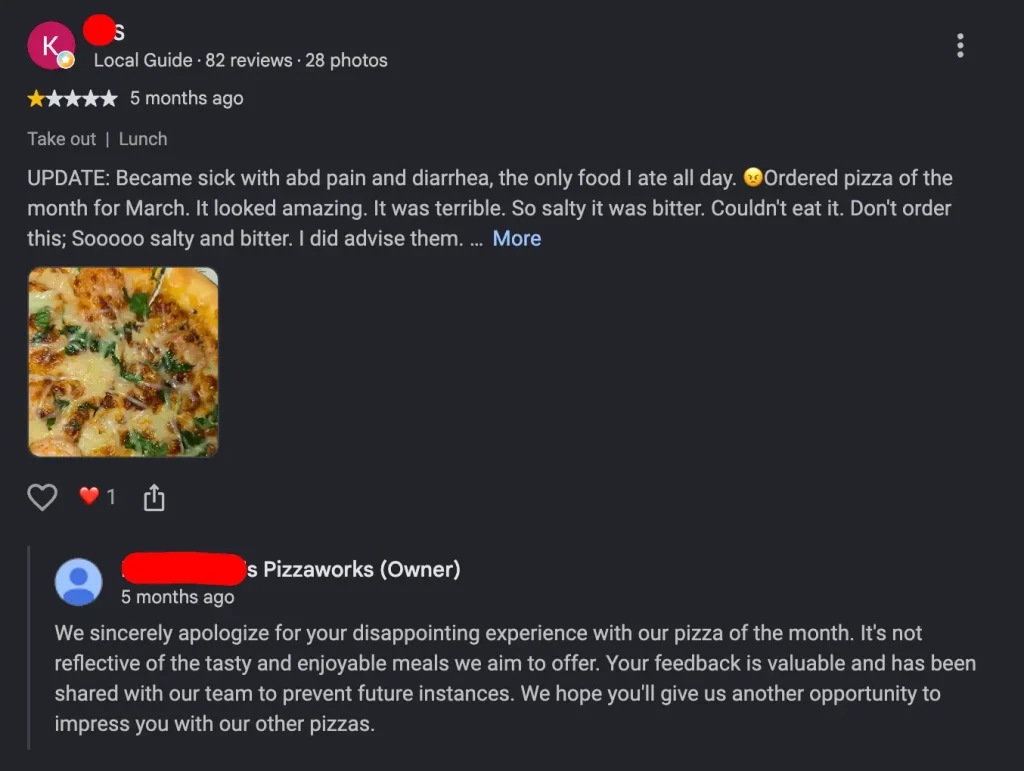
It shows that you have accountability and character. Here’s a guide to help you reply to negative reviews: Don’t get emotional or defensive about your services; Rather, acknowledge the issue the customer has raised, apologise for the problems they’ve faced, take it offline to stop the issue from escalating, and still leave a public reply. This shows that you care for the customer and their opinions.
1-star: “I am shocked to hear what you’ve had to face in one of our restaurants. I am extremely sorry for that. We will definitely try to train our staff to avoid such scenarios. Please leave a detailed complaint at [email protected] – Wallis.”
3-star, mixed: “We always appreciate genuine feedback, Nathan. Thanks for noticing the issue with our menu design; we’ll look right into it. Also, we’re glad you liked our sushi. If you have anything more to discuss, please write to me at [email protected] – Harris.”
Suspected fake reviews
You have to deal carefully with fake reviews. Although they might be trying to ruin your reputation or spread misinformation, you should try to reply with facts instead of writing an emotional reply.
Suspected fake: “We’ve reviewed our footage, but none of the interactions match your description. We’ll be glad to clear any misunderstandings you might have; please write to us at [email protected] for further discussion.”
Suspected fake: “Customer service is something that we take great pride in. All of our staff are well-trained to handle customers. Please provide necessary proof of the incident at [email protected] so that we can take a closer look at the matter.”
The ground rules
There are many important factors to consider while replying to reviews. Most businesses take too long to reply to reviews, or they don’t reply to them at all. This can frustrate customers, since 91% expect replies within a week. Aim for 24-48 hours to keep customers happy. Don’t try to cut corners by automating responses using AI or chatbots.
Data suggests 50% of users lose faith in companies that use AI automation to reply to customers. Your reply should feel natural. Each complaint or review is different. Reply to each review according to their situation and try to address the problems they have faced. This will build a connection with your customers and create loyalty.
Fake, Anonymous & Defamatory Reviews
Fake reviews, especially the harmful kind, are always a major concern for any business. These reviews try to tarnish your reputation, spread misinformation about you, and sometimes they talk about how much better your competitor is. Around 30% of all online reviews are fake. Before taking any necessary steps to counter them, you first need to identify which reviews are fake and which ones are real.
Anonymous doesn’t mean fake.
There are many reasons that customers want to post reviews anonymously. They might be concerned about their privacy and want to freely criticise without facing future problems, and don’t want their names attached to negative reviews, especially if the service is in a sensitive category. Most people now take anonymous reviews less seriously as there is a rise in fake anonymous reviews all over the internet, so you shouldn’t overreact to a review and answer with facts.
How to spot a genuinely fake review.
This is a tricky problem, but most fake reviews follow patterns. To identify a fake review, look at the content of the review. Most fake reviews try to ruin your reputation by saying bad things about your business without providing details. They often come from unverified profiles or profiles with no prior history or data. Sometimes, they praise your competitor highly without any evidence that you have bad service. Using these, you can easily tell which reviews are fake.
The crackdown is real and accelerating.
From April 2026, the FTC has started a crackdown on fake reviews on review platforms. They identify fake reviews as one of these categories:
- Reviews made with AI without using the product or service.
- Positive reviews gained after giving the customer an incentive like discounts.
- Reviews from people related to the business.
The FTC is moving fast with its policy to make sure customers are not deceived into buying a product or a service.
How to remove a review vs. removal scams.
In most review platforms, you cannot directly remove reviews, but you can flag reviews for violating the platform’s policies by following this process:
- Log in to your business account and find the review.
- Click the three dots and click on Report Review.
- Choose the policy the review violates.
- Submit and wait for moderators to verify the review.
Be careful about scams where people offer to remove negative or suspicious reviews. They post those reviews themselves to scam you.
When it crosses into defamation.
Sometimes negative reviews will become defamatory when they try to mislead the readers by making false claims about the business. This can seriously harm your reputation, so you should be alert about these reviews and take necessary steps when needed. You should first reply to the review stating the facts of the incident mentioned and ask for proof. If they fail to provide proof, you should flag these reviews to the platform.
How Reviews Affect SEO – and the New AI Discovery Layer
Local SEO: the map-pack signals.
Google Map Pack is the result you see in Google after you search for a business. It shows the business details, its Google Business Profile, and its location on the map. It gives the most visibility to businesses. Reviews play a large part in it, as they have 17% weight in the ranking of business profiles.
Review volumes also seem to play a large role in the ranking, as products with 5+ reviews have been shown to get 270% more customers than those with 0 reviews. More than just volume, the velocity and recency are also important factors, as a steady stream of reviews is more helpful for the business.
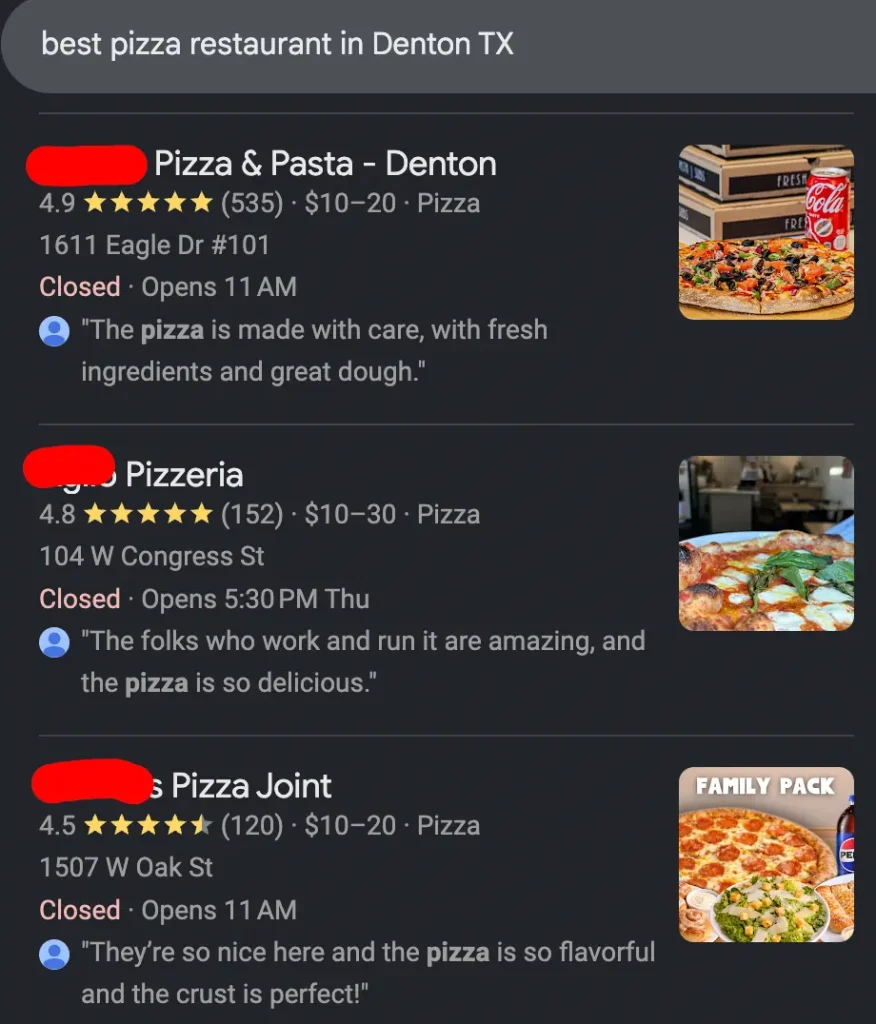
Other important factors include the star rating the customer provided and the response rate. What your customers say about you is also important to improve the rankings; if the system finds positive keywords within reviews, it will generate a better score for your business.
Review schema and rich snippets.
Review schema is a data structure that helps search engines understand your review information from the reviewer, such as the reviewer’s personal information and the star rating. At the same time, rich snippets are basically the extra information shown in Google searches that come from the information gathered in the review schema.
This could be a simple review and a star rating in the Google search result of your business. These are very important for your business profile, as users can get the most information about your business just from a simple Google search. The review schema can be of two types: one can show a simple review from a user, and another one can generate the average rating of all your reviews and provide a snapshot of that result in the Google search.
Why reviews get filtered.
The reason many reviews get filtered is that review sites like Google, Yelp, and TripAdvisor have automated AI systems that detect patterns in the reviews and look for spam or fake reviews. If they suspect that a review might be fake, they take it down, or they get filtered out. The things they look for are –
- Automated filters. The algorithm suspects that the review is suspicious because of the content of the review or if there is an abnormal increase in recent reviews.
- Policy Violations. The review violates one or more of the platform’s policies.
- Suspicious Reviewer Profile. If there is not enough information on the user or if there is a bad history of the user on the platform, the review will be filtered.
The frontier: reviews and AI-driven discovery (GEO).
In this AI era, customers are looking towards AI and AI-generated summaries in online searches to determine which service they want to choose. Reviews play a big part in getting your business to rank up in GEO, where customers can see them in search results. AI uses these metrics to judge your business:
- Your rating on review platforms.
- Recency and content of user-generated reviews.
- Authentic feedback from the business.
So, if you want to do well in AI search results, you have to focus on getting more authentic customer reviews. A business that has only a few reviews will never rank in front of a business that has 50+ reviews and an average rating of 4.5+.
Building a Review Workflow (With or Without Software)
As we’ve discussed in this article, it is very important for businesses to have customer reviews on review platforms. They help them rank higher in search results and show credibility. Here’s how you can build your own Review Workflow:
Without Software
Building a review workflow without software can get overwhelming when there is an increase in customer reviews. It’s more suitable for smaller businesses.
- Manually ask staff to nudge customers for reviews during or after service.
- Make Email templates to send to users after service.
- Track reviews using review platforms like Google, Yelp, and TripAdvisor.
- Respond to reviews manually and flag suspicious reviews.
With Software
There are many customized tools available to help with review workflow automation. Each with its own perks.
- Podium. It helps to send auto-generated text messages as replies to customer reviews. You can use this alongside things like QR codes to get fast reviews and make instant replies.
- Birdeye. This can help you manage your various profiles on different platforms. You can use it to customise different responses for different types of reviews.
- Alchemy. This is an analytics tool to help you analyse the review data from your profiles. Make predictions and suggestions to help you better manage your business.
- NiceJob. This software integrates with your CRM tool to keep track of your customers and their reviews. From their entry up until they leave a review can be traced from here.
Industry-Specific Playbooks
There are different review platforms that you should target depending on your business type. Some are general review platforms, and some are specific ones.
- Restaurants & hospitality: The most prominent platforms for these types of businesses are Google, Yelp, and Tripadvisor. Remember to reply fast, within 24-48 hours, which is when most customers expect a reply.
- Healthcare: Google Business Profile, Healthgrades, Zocdoc, and WebMD are some of the largest platforms for these types of businesses. Make sure to be empathetic in your replies while dealing with patient reviews.
- Home services & trades: Google Business Profile and Yelp are the main websites. Make sure to have a detailed profile with all your service offerings to help customers decide what to choose.
- SaaS & B2B:. G2 and TrustRadius for SaaS, and Clutch and GoodFirms for B2B businesses are the go-to sites. Make the content simple and understandable so that the customer can understand the value without complication.
- Multi-location & enterprise: Google Business Profile and Yelp are the best platforms. Make sure to have a uniform experience across all locations. Manage all location reviews under the same system and same criteria.
- E-commerce & retail: Trustpilot is the platform with the most relevant traffic for these types of businesses. Make sure to get more customer feedback because these websites rank really highly in the algorithm.
Frequently Asked Questions
Can I delete a Google review?
No, you cannot delete Google reviews directly. However, you can flag those reviews, and Google will remove them if they violate the rules and policies.
How many reviews does my business need?
You should get 100+ reviews for your business. Check your competitors and try to get more reviews than the competitor.
Are incentivized reviews legal?
Offering rewards for a review is prohibited by the FTC’s Consumer Review Rule. Try to get original reviews, and having negative reviews is not a bad thing.
Does responding to reviews actually help my ranking?
Yes, responding to reviews will signal Google that you are an active business. It also improves conversions, leading to better ranking indirectly.
What’s the ideal star rating?
You should aim for a 4.3-4.7 star rating for your business since a perfect 5.0 looks suspicious to the platform and customers.
Is review gating allowed?
No. Review gating is not allowed since you are only asking happy customers to write a review. However, you can ask happy customers offline or privately to write reviews.
Do I need to be on every review site?
No. Understand your audience and where they are. Be active on that platform only. However, keep your presence on other similar sites for a higher presence online.
How do reviews affect AI recommendations?
AI tools like ChatGPT, Gemini, Perplexity, and Google’s AI Overviews use reviews as a primary signal to recommend businesses. Volume, recency, sentiment, multi-platform presence, and rating influence the recommendation.
How fast should I respond to a review?
You should respond to a review within the first 24 hours. If you miss the timeline, try to do it within the next 48 hours.
Are fake reviews really a problem?
Yes, fake reviews make the platforms and customers suspicious. The platforms will purge those reviews and can even ban you.
How do I get customers to actually leave reviews?
Ask the right customers at the right time with a smooth process through the channel they most use to get customers to leave reviews.
Should I respond to positive reviews too, or just negative ones?
You should respond to all positive and negative reviews to improve connection and build trust among potential customers. They will see that you care about the customers.
Can I ask customers to change or remove a negative review?
No, you cannot ask customers to change or remove a negative review. However, you can solve the problem and ask the customers to update the reviews.
How often should I ask for reviews?
You should ask one or two times for reviews. Asking more than that will feel disturbing to the customers. A basic ask and a follow-up request are good enough.
Should I use AI to respond to reviews?
You can use AI to write the draft. But make sure to customize the review with your personal touch.
What should I do if a competitor is posting fake negative reviews?
Don’t accuse them publicly. Reply to those reviews and flag them with proper documentation to remove those reviews.
Do reviews still matter if I get most of my business from referrals?
Yes. Even referred customers check your reviews on different platforms before making a decision.

