
Capterra is one of the most popular marketplaces for businesses to compare, review, and discover software using verified reviews from original users and make the right buying decision. People call it ‘Yelp of business software’ since it lets the real users share their feedback and ratings so that potential buyers can easily weigh the quality instead of believing vendor marketing. However, the real question people ask is not what Capterra is but whether it is paid, reliable, and trustworthy or not. This guide will explain what Capterra is, how it works, and whether it should be trusted or not.
What is Capterra?
Capterra is a review platform and directory for business software that allows potential buyers to find the right software across hundreds of categories and review original feedback from verified buyers to make an informed decision. Founded by Michael Ortner and Rakes Chilakapati in 1999, it began its journey as an online marketplace for business software. Later in 2009, it added the user review method.
Currently, it lists 100,000+ software options across 900+ categories, including CRM, accounting, project management, and more. The platform hosts more than 2.5 million verified reviews, and each month, it helps millions of buyers to research software for their needs.
Capterra mainly focuses on service providers and software that are useful, whether you are an IT founder or a seasonal buyer. The idea is simple – you can compare the competing tools, read the feedback, and filter by industry, budget, and size instead of searching hundreds of vendor sites to buy a single software.
How does Capterra work?
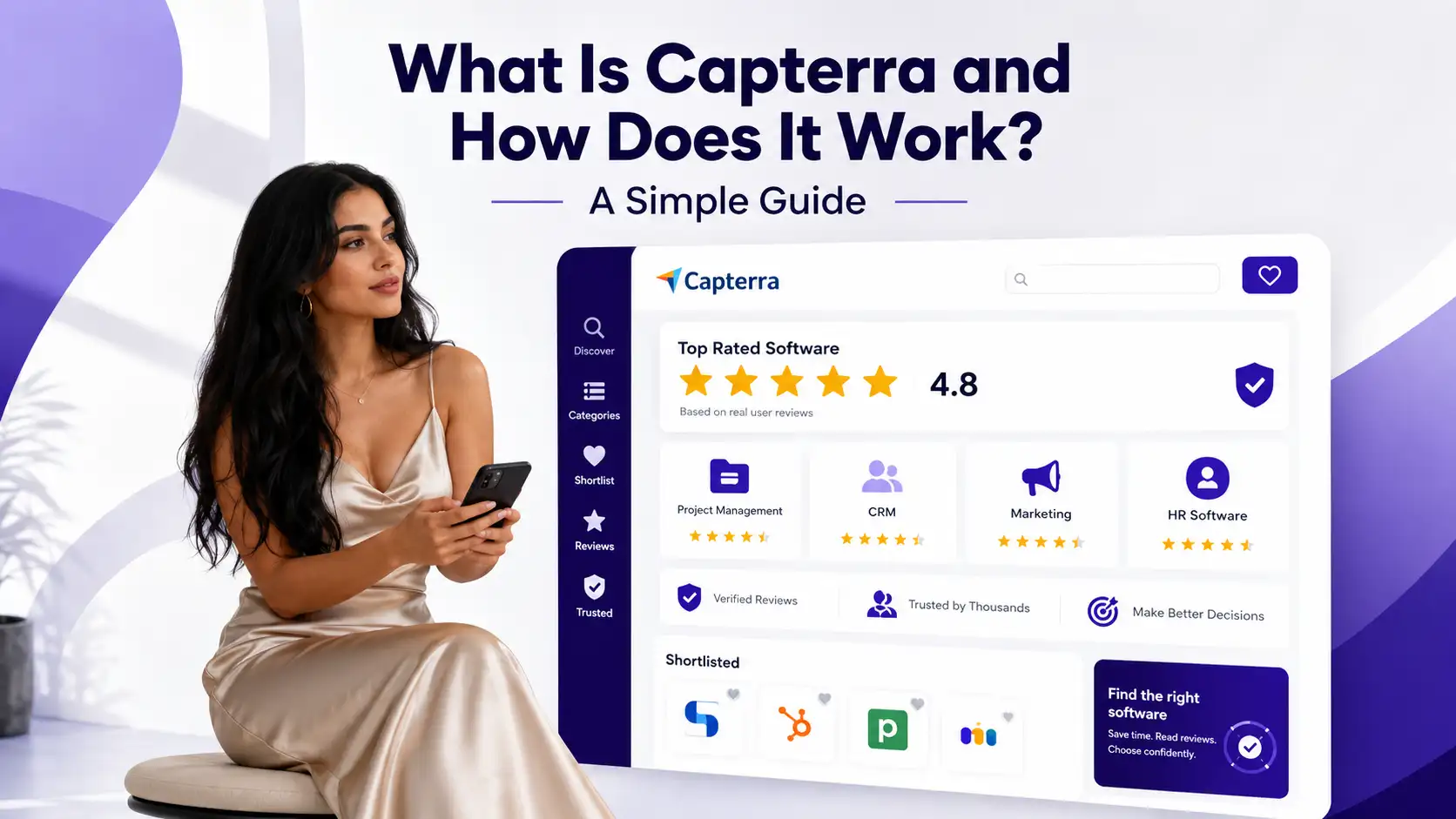
Capterra works in three steps: aggregate verified reviews from the users, organize software into categories, and fund the free service through vendor advertisements. Let’s get into the details.
Search, compare, and shortlist.
Potential buyers search for the software by name, feature, business needs, or industry, and Capterra shows the comparison side by side on ratings, features, pricing, and pros and cons. The company also publishes a data-backed shortlist to make the comparison easier. Its algorithm ranks the software based on the ratings of the users for the past 24 months, and popularity is influenced by search interest and review freshness.
Verified reviews
The platform collects reviews from verified buyers, and every review goes through a quality-check process before publishing. A human team checks the LinkedIn profile or business email of the reviewer, and the platform uses a modern algorithm to analyze the text quality and plagiarism. It can also detect AI-generated content to ensure maximum helpfulness in the reviews.
The reviews are then sorted by quality and helpfulness based on the quality, depth, and recency instead of star rating. Buyers can sort the reviews by rating and recency depending on their needs. Vendors can also respond to the reviews but cannot remove them.
Sponsored vs. organic listings
Most buyers are confused here regarding the paid and organic listings. Capterra lists every software provider in the category, whether free or paid. However, vendors can pay the platform for sponsored placements that appear more prominently on the platform. You can see the mark and icon for those sponsored listings. Besides, paying for the platform does not offer a better star rating or a higher spot in the review category. That means the ads are labeled and separated from the organic ranking.
Who uses Capterra — buyers and vendors
Capterra mainly serves two types of audiences: buyers and vendors. The buyers include department heads, IT managers, small business owners, procurement specialists, and so on. They can easily check the shortlist and compare the software to understand the differences based on the use case. They also cross-check the comparison against other sites, such as G2, to be sure about it.
Vendors are the software providers who use this platform to get discovered and build trust and credibility among potential buyers. A vendor can get a free listing, collect reviews from the customers, earn category badges like ‘Best Ease of Use’ or ‘Best Value’, and respond to customer feedback.
Since a single review syndicates across Capterra, GetApp, and software advice, the review works in three places at once. That’s why managing the reviews, maintaining the consistency, and responding well are important. Leaving this part to the expert on Capterra review management service can save you time and effort.
However, since customers are now smart and they cross-check the reviews on other platforms like G2, ensuring a complete online presence is important to rank higher on search results and improve audience trust. Many business owners use our online reputation and review management service to cover everything.
How does Capterra make money?
Capterra makes money from the vendors through a paid plan. It uses advertisements such as the pay-per-click (PPC) model, where vendors bid to get featured in a category. Every time a potential buyer clicks through the platform, Capterra earns a fee. The company has been using this model since the beginning. It also offers premium subscriptions and pay-per-lead campaigns where vendors will get buyer-intent data, lead generation, and profile enhancement. So overall, basic listing is free, and paid programs offer some additional features.
Capterra vs. G2 vs. Software Advice
Many buyers get confused about these three since all of them are for software reviews from verified buyers. But here are the differences.
| Capterra | G2 | Software Advice | |
|---|---|---|---|
| Focus | Business software directory + reviews | Customer reviews + category Grid | Personalized suggestions+ reviews |
| Best for | Small and medium companies comparing many options | B2B SaaS, mid-level-market to enterprise | Buyers looking for 1-on-1 guidance |
| Ranking | Shortlist (Ratings × Popularity) | G2 Grid (Satisfaction × Market Presence) | FrontRunners reports |
| Revenue | Pay-per-click advertising | Subscriptions + intent data | Pay-per-lead / advisor referrals |
| Owner (2026) | G2 | G2 | G2 |
| Distinctive edge | Large category breadth for SMBs | Strongest brand + detailed Grid | Human advisors guide your pick |
What’s new with Capterra in 2026
The biggest change for Capterra is the shift in ownership. The company has been owned by the Gartner company since 2015. In February 2026, G2 acquired Capterra, GetApp, and Software Advice from Gartner for $110 million. That means all the largest software review platforms are now under one umbrella. But for the buyers, the regular experience is still unchanged.
Frequently asked questions
Is Capterra free?
Yes, Capterra is completely free for users to write and read reviews, compare, and find software, and free for vendors to list their software. However, the platform has some premium features for vendors to offer, such as lead generation, analytics, and other premium profile features.
Can fake reviews still appear on Capterra?
Capterra strictly monitors the reviews and users before publishing the reviews. However, no platform can eliminate fake reviews completely. So yes, fake reviews can still appear on Capterra.
Is Capterra legit?
Yes. Capterra is a legit company with millions of reviews and software listings. The platform has a human team to check the authenticity of the reviewer through LinkedIn profiles and business profiles.
How many reviews does a software company need to build credibility?
The number depends on the industry, category, and competition of that specific software. However, having 100+ reviews will certainly build credibility among potential buyers.
Does having more Capterra reviews improve software visibility?
Yes, having consistent, recent, high-quality Capterra reviews will improve the software listing’s visibility across search engines and review platforms.

